
How Long Does It Take to Learn Carnatic Music? Realistic Timeline Guide 2026
How long does it take to learn Carnatic music? Discover realistic timelines for different goals, age-specific progress rates, and strategies to accelerate your musical journey effectively.
Introduction
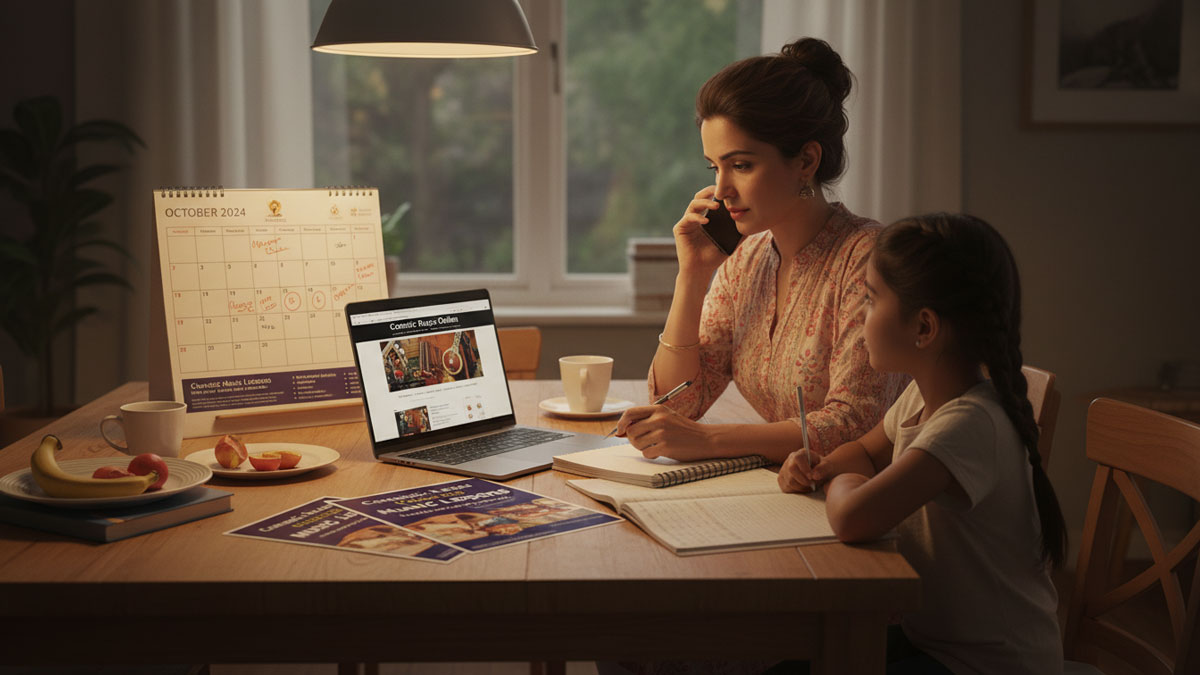
“How long will it take before my daughter can sing at our family’s Diwali celebration?” asked Rekha during her consultation call from her San Jose home. Her 9-year-old had been begging to learn Carnatic music, but as working parents, Rekha and her husband needed to understand the time commitment before enrolling.
If you’re wondering how long it takes to learn Carnatic music, you’re asking one of the most important questions for planning your family’s musical journey. Unlike learning a pop song or picking up a hobby skill, Carnatic music is a comprehensive classical system that requires realistic timeline expectations.
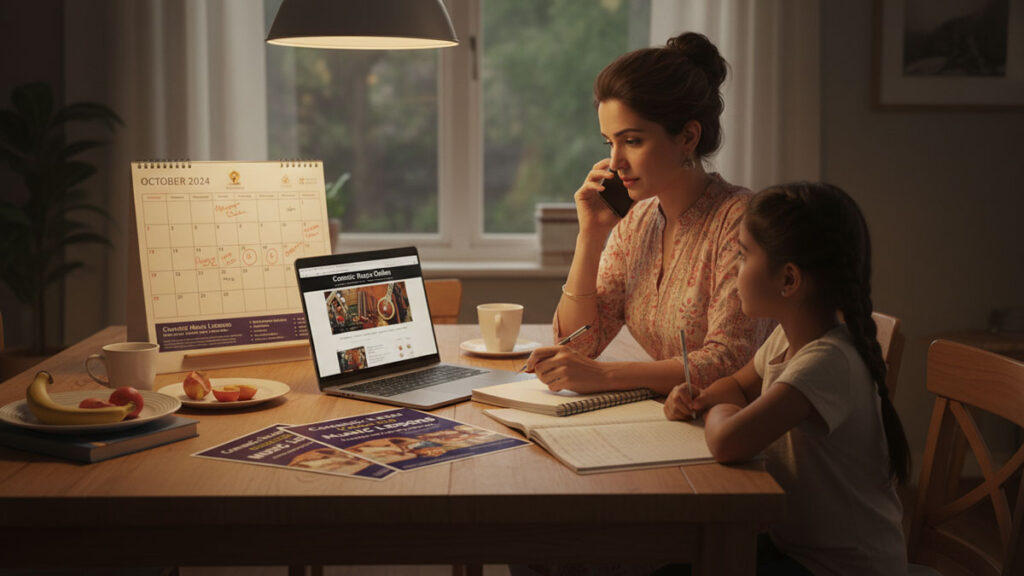
Table of Contents
The answer to “how long does it take to learn Carnatic music” depends entirely on what you mean by “learn.” Do you want your child to sing simple songs at family gatherings? Perform confidently at cultural events? Develop advanced improvisation skills? Each goal has a different timeline.
This comprehensive guide provides realistic timelines for different learning objectives, explains factors that speed up or slow down progress, and helps you set achievable milestones. Whether you’re planning for a 6-year-old beginner in California or considering adult learning in New York, you’ll understand exactly what to expect at each stage.
By the end of this article, you’ll have a clear roadmap of your musical journey with specific milestones, realistic timeframes, and strategies to optimize your learning progress.
Understanding “Learning” Carnatic Music: Different Goals, Different Timelines
Defining Your Learning Objectives
How long does it take to learn Carnatic music? The timeline depends entirely on your definition of musical competency and personal goals.
| Learning Goal | Timeline | What You Can Achieve | Skill Level |
|---|---|---|---|
| Cultural Familiarity | 3-6 months | Recognize ragas, sing simple songs, understand basics | Beginner |
| Family Performance | 6-12 months | Confident family gathering performances, basic repertoire | Elementary |
| Community Events | 12-18 months | Temple programs, cultural association events | Intermediate |
| Advanced Amateur | 2-3 years | Complex compositions, basic improvisation | Upper Intermediate |
| Teaching Capability | 3-5 years | Instruct beginners, deep cultural knowledge | Advanced |
| Performance Mastery | 5+ years | Concert-level skills, advanced improvisation | Expert |
The Three Learning Phases
Phase 1: Foundation Building (Months 1-6)
Primary Focus: Basic technique, cultural introduction, simple compositions

What Happens During Foundation Phase:
- Swara Recognition: Learning Sa-Re-Ga-Ma-Pa-Da-Ni sounds and relationships
- Basic Breathing: Proper vocal technique and breath control
- Simple Songs: 2-3 elementary compositions like basic slokas or children’s pieces
- Cultural Introduction: Understanding what Carnatic music is and why it’s special
- Practice Habits: Establishing regular practice routines and discipline
Realistic Progress Markers:
✅ Month 1: Can identify and sing basic swaras with guidance
✅ Month 2: Memorizes first simple song, understands basic rhythm
✅ Month 3: Sings with reasonable pitch accuracy, shows cultural interest
✅ Month 4: Comfortable with 2-3 songs, beginning raga recognition
✅ Month 5: Shows improvement in breath control and voice quality
✅ Month 6: Ready for more complex material, excited about progress
Phase 2: Skill Development (Months 6-18)
Primary Focus: Structured learning, repertoire building, cultural depth
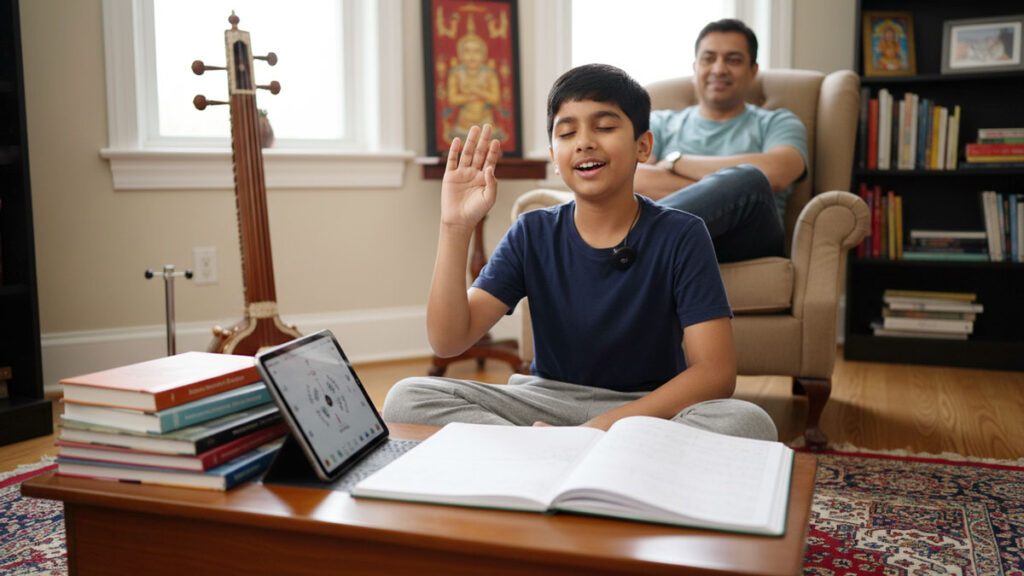
What Happens During Skill Development:
- Structured Compositions: Learning varnams, simple kritis, and traditional pieces
- Raga Understanding: Beginning to recognize and sing basic ragas properly
- Rhythm Coordination: Understanding tala systems and clapping patterns
- Cultural Context: Learning about composers, meanings, and traditions
- Performance Preparation: Building confidence for family and community events
Realistic Progress Markers:
✅ Month 8: Comfortable with structured compositions like simple varnams
✅ Month 10: Can perform confidently for extended family gatherings
✅ Month 12: Understanding 3-4 basic ragas and their characteristics
✅ Month 14: Beginning basic improvisation within familiar ragas
✅ Month 16: Ready for community cultural event participation
✅ Month 18: Solid intermediate foundation for advanced learning
Phase 3: Advanced Development (18 months – 3+ years)
Primary Focus: Mastery, improvisation, cultural depth, teaching preparation
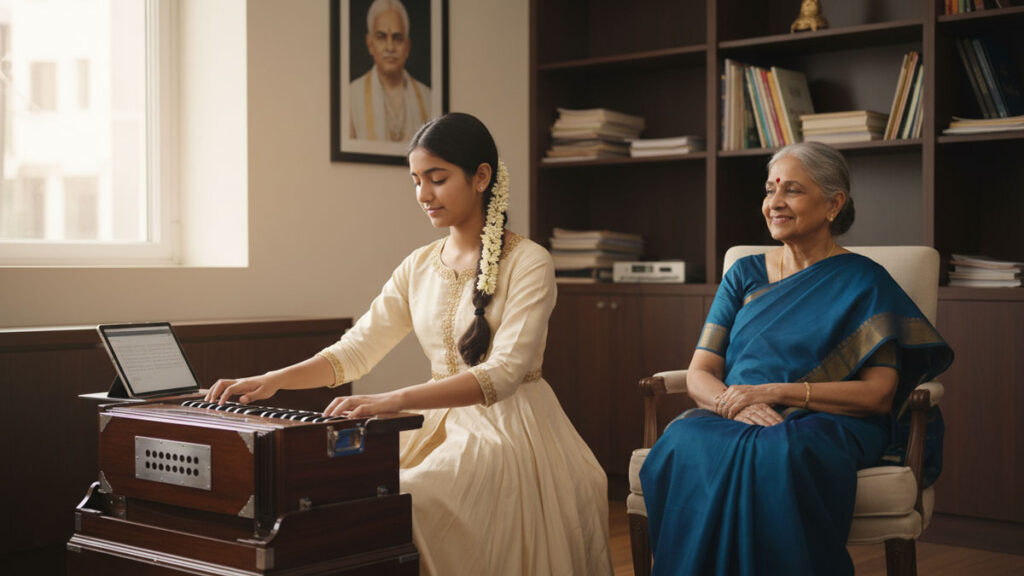
What Happens During Advanced Development:
- Complex Compositions: Mastering challenging kritis by great composers
- Improvisation Skills: Developing alapana, neraval, and kalpana swara abilities
- Cultural Mastery: Deep understanding of spiritual and philosophical contexts
- Performance Excellence: Confident solo performances at significant cultural events
- Teaching Readiness: Ability to guide beginners and explain concepts clearly
Realistic Progress Markers:
✅ Year 2: Performance-ready for major cultural events and festivals
✅ Year 2.5: Beginning advanced improvisation within familiar ragas
✅ Year 3: Teaching simple concepts to younger students or siblings
✅ Year 3.5: Developing personal style and artistic interpretation
✅ Year 4+: Continuing growth in complexity and cultural understanding
Factors That Affect Learning Speed
Individual Factors: What Makes Some Students Progress Faster
How long does it take to learn Carnatic music varies significantly based on individual characteristics and circumstances.
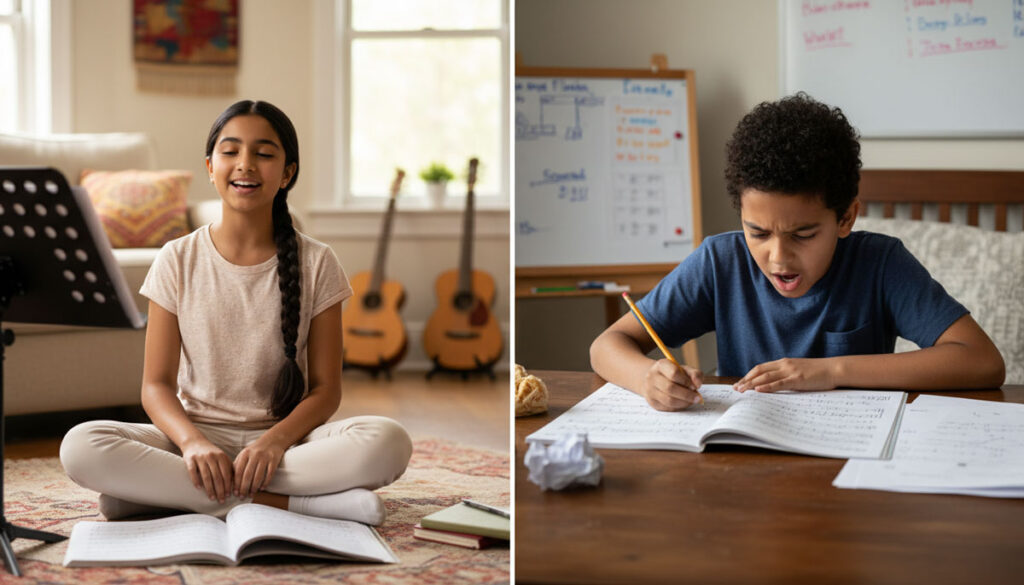
🎵 Natural Musical Ability
Students with Musical Gifts Progress Faster When They Have:
- Perfect or near-perfect pitch: Can identify and reproduce notes accurately from early lessons
- Strong rhythm sense: Naturally feel and maintain steady beats and complex patterns
- Good musical memory: Quickly memorize melodies, lyrics, and complex compositions
- Natural expressiveness: Instinctively understand emotional content of music
- Easy vocal production: Comfortable singing voice without strain or technical difficulties
Students Without Natural Gifts Can Still Excel By:
- Developing systematic practice habits: Consistency often beats natural talent
- Focusing on technical understanding: Using analytical skills to master concepts
- Building slowly and thoroughly: Creating solid foundations that support long-term growth
- Emphasizing cultural connection: Finding motivation through heritage and meaning
- Celebrating small victories: Maintaining enthusiasm through steady progress recognition
🎵 Age and Development Stage
Age-Related Learning Characteristics:
| Age Group | Learning Advantages | Learning Challenges | Optimal Timeline |
|---|---|---|---|
| Ages 4-6 | Natural absorption, no inhibitions | Short attention span, needs play-based learning | 18-24 months to basic performance |
| Ages 7-12 | Rapid skill acquisition, good memory | Needs motivation and variety | 12-18 months to intermediate level |
| Ages 13-18 | Abstract thinking, cultural appreciation | Competing interests, social pressures | 12-15 months to advanced concepts |
| Adults | Self-motivation, cultural understanding | Vocal flexibility concerns, time constraints | 18-24 months to satisfactory amateur level |
🎵 Previous Musical Experience
Background That Accelerates Carnatic Learning:
- Western classical training: Provides discipline, notation reading, and vocal technique
- Other Indian classical forms: Familiar with raga concepts and traditional approaches
- Folk or devotional singing: Comfortable with vocal expression and Indian musical elements
- Instrumental background: Understanding of scales, rhythm, and musical structure
- Choir or group singing experience: Comfortable with harmonies and group musical experiences
No Musical Background – No Problem: Many successful Carnatic musicians started with zero musical experience. Advantages of fresh beginners:
- No bad habits to unlearn from other musical styles
- Open to traditional teaching methods and cultural approaches
- Often more patient with gradual, systematic progression
- Purely motivated by cultural connection rather than musical achievement comparison
Family and Environmental Factors
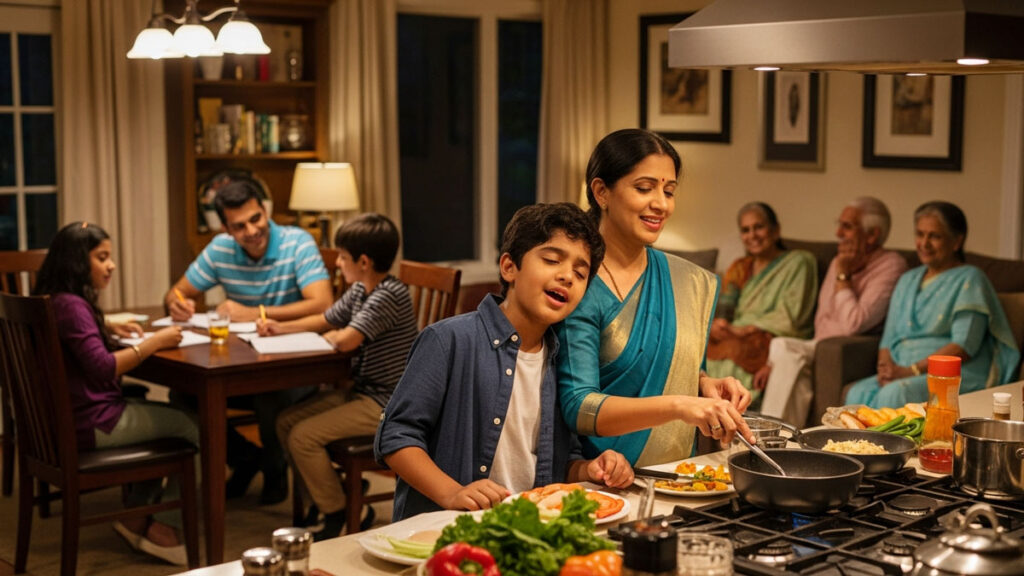
🏠 Home Environment Support
Factors That Speed Up Learning:
- Regular practice schedule: Consistent daily practice times that become family routine
- Family musical appreciation: Parents and siblings who value and enjoy Indian classical music
- Cultural integration: Music becoming part of family celebrations, religious practices, and daily life
- Positive reinforcement: Family members who celebrate progress and encourage continued learning
- Dedicated practice space: Quiet, organized area where student can focus without distractions
Environmental Challenges That Slow Progress:
- Competing activities: Over-scheduled children without sufficient time for music practice
- Lack of family support: Parents who don’t understand or value the time commitment required
- Cultural disconnect: Families who don’t integrate music into their cultural practices
- Inconsistent schedules: Constantly changing practice times due to family chaos
- Negative reinforcement: Criticism or impatience with normal learning challenges
🏠 Community and Cultural Connections
Community Factors That Accelerate Learning:
- Active Indian cultural associations: Regular opportunities to hear and perform Carnatic music
- Temple or religious connections: Integration of music learning with spiritual practices
- Extended family support: Grandparents or relatives who appreciate and encourage musical development
- Peer learning groups: Other children in the community also learning Indian classical music
- Performance opportunities: Regular chances to showcase learning at cultural events
Teacher and Program Quality
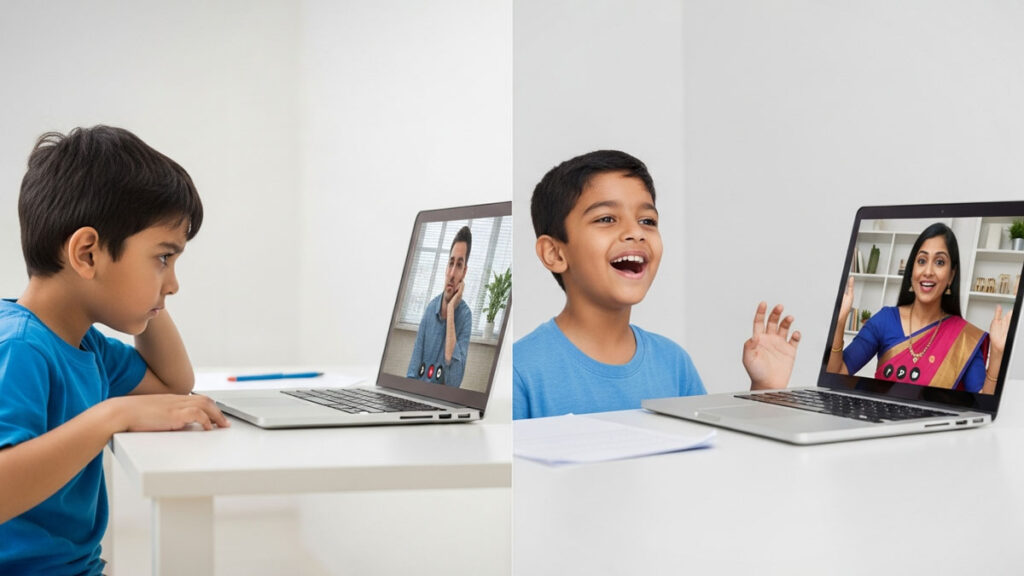
🎯 Impact of Quality Instruction on Learning Speed
Expert Teachers Accelerate Learning Through:
- Personalized pacing: Adapting speed and methods to individual student needs and abilities
- Efficient progression: Knowing exactly when students are ready for more challenging material
- Immediate correction: Fixing technique and cultural mistakes before they become habits
- Motivation maintenance: Keeping students engaged and enthusiastic through challenges
- Cultural authenticity: Providing deep traditional knowledge that enhances meaning and connection
Poor Quality Instruction Slows Learning By:
- Generic approaches: One-size-fits-all methods that don’t match individual learning styles
- Incorrect foundations: Teaching mistakes that require future correction and relearning
- Lack of cultural depth: Focusing only on songs without spiritual and historical context
- Inconsistent availability: Unreliable teachers who disrupt learning continuity
- Limited expertise: Instructors without sufficient knowledge to guide advanced development
Why Swaramrit’s Approach Optimizes Learning Speed: ✅ Experienced Faculty: Teachers with proven track records of student success
✅ “Learning through Encouragement”: Methodology that maintains motivation while ensuring progress
✅ Personalized Attention: 1-on-1 instruction adapted to each student’s pace and style
✅ Cultural Integration: Deep traditional knowledge that makes learning meaningful
✅ Systematic Progression: Clear curriculum that builds efficiently on previous learning
Age-Specific Learning Timelines
Early Childhood (Ages 4-7): The Foundation Years
How long does it take to learn Carnatic music for young children requires special consideration of developmental stages and realistic expectations.
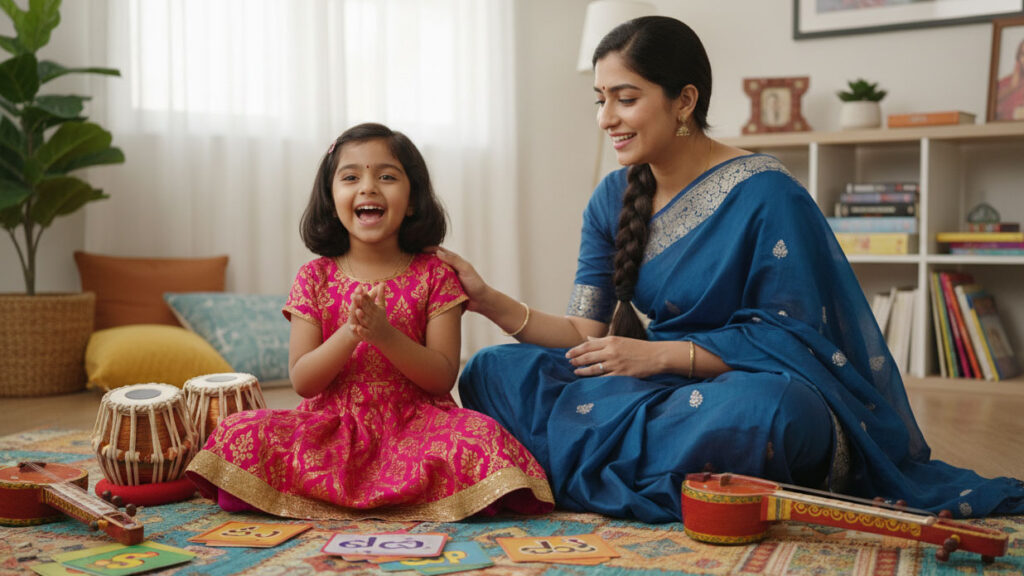
Realistic Timeline for Early Childhood:
Months 1-6: Musical Play and Familiarity
- Focus: Making music fun, building positive associations, basic sound recognition
- Achievements: Enjoys singing simple swaras, recognizes familiar tunes, sits through short lessons
- Practice: 10-15 minutes daily through play and family singing time
- Parent Role: Essential – sitting with child, encouraging participation, making it enjoyable
Months 6-12: Structured Fun Learning
- Focus: Simple songs, basic rhythm, cultural introduction through stories
- Achievements: Memorizes 2-3 simple compositions, shows pitch improvement, cultural curiosity
- Practice: 15-20 minutes daily with games, songs, and family participation
- Parent Role: High involvement in practice, celebrating progress, maintaining enthusiasm
Months 12-18: Beginning Real Skills
- Focus: Proper technique introduction, longer compositions, performance preparation
- Achievements: Can perform for family, shows musical understanding, requests music time
- Practice: 20-25 minutes daily with mix of instruction and independent singing
- Parent Role: Supportive supervision, helping with practice routine, cultural integration
Year 2-3: Childhood Foundation Solidification
- Focus: Building solid technical and cultural foundation for future advanced learning
- Achievements: Confident family performances, basic raga recognition, cultural appreciation
- Practice: 25-30 minutes daily with increasing independence and musical maturity
- Parent Role: Encouragement and support while fostering growing independence
School Age (Ages 8-12): The Acceleration Years
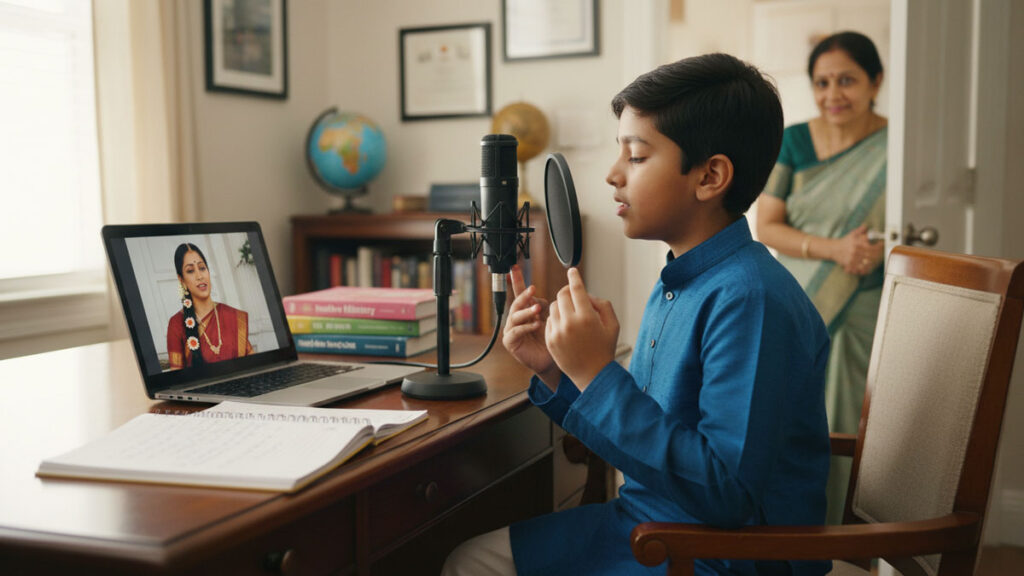
Optimal Learning Timeline for School Age:
This is often the fastest learning period due to:
- Cognitive readiness: Abstract thinking development supports musical concepts
- Memory capacity: Peak memorization ability for songs and complex patterns
- Attention span: Can focus for longer practice sessions and detailed instruction
- Cultural curiosity: Interested in heritage and family traditions
- Performance confidence: Less self-conscious, enjoys showing off new skills
Accelerated Timeline for Ages 8-12:
Months 1-4: Rapid Foundation Building
- Achievements: Master basic exercises, learn 3-4 songs, understand rhythm basics
- Practice: 30-40 minutes daily with good focus and retention
- Progress Rate: Approximately 50% faster than adult beginners
Months 4-8: Skill Integration
- Achievements: Comfortable with varnams, beginning raga recognition, family performances
- Practice: 35-45 minutes daily with increasing musical maturity
- Progress Rate: Steady advancement with visible weekly improvement
Months 8-12: Intermediate Development
- Achievements: Community event performances, cultural understanding, peer teaching ability
- Practice: 40-50 minutes daily with growing independence and musical judgment
- Progress Rate: Ready for advanced concepts that might take adults 18-24 months
Year 2: Advanced Preparation
- Achievements: Complex compositions, basic improvisation, cultural leadership roles
- Practice: 45-60 minutes daily with self-directed learning and creative exploration
- Progress Rate: Approaching advanced amateur level with continued guidance
Teenage Years (Ages 13-18): The Mastery Phase
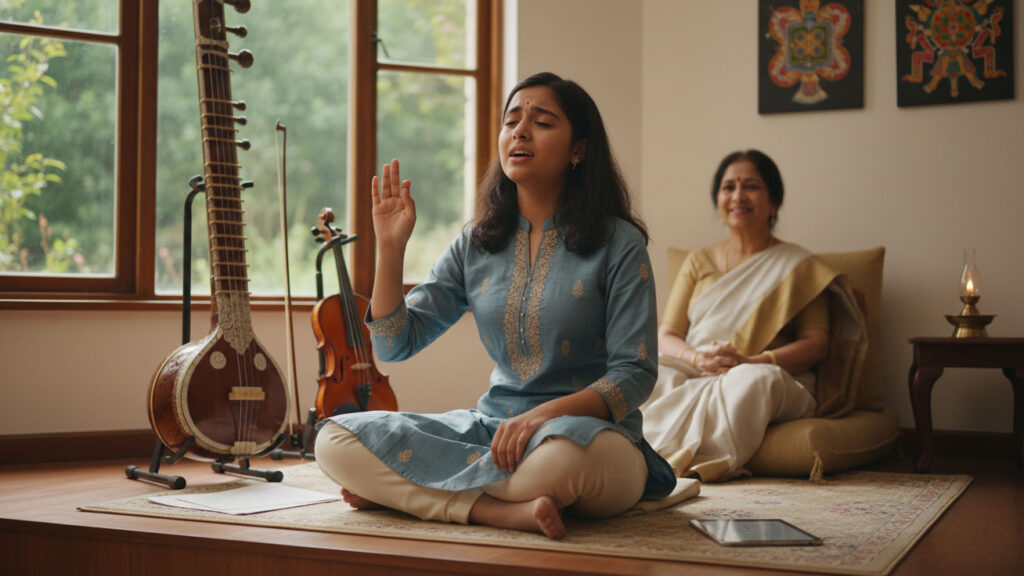
Advanced Learning Timeline for Teenagers:
Teenagers Can Achieve in 12-18 Months What Takes Adults 2-3 Years:
Accelerated Development Factors:
- Cultural identity formation: Music becomes part of personal and cultural identity development
- Advanced cognitive ability: Can understand complex philosophical and spiritual concepts
- Performance confidence: Natural stage presence and audience connection ability
- Cultural pride: Enjoys being cultural ambassador among peers and community
- Teaching preparation: Often ready to mentor younger students and family members
Typical Teenage Timeline:
Months 1-6: Foundation Mastery
- Achievements: Quickly master basics, demonstrate cultural understanding, show artistic sensitivity
- Practice: 45-60 minutes daily with high efficiency and musical maturity
Months 6-12: Artistic Development
- Achievements: Advanced compositions, improvisation skills, performance excellence
- Practice: 60+ minutes daily often by choice due to genuine enjoyment and cultural connection
Year 2: Mastery and Leadership
- Achievements: Teaching capability, cultural community involvement, artistic personal style
- Practice: Self-directed learning with continued teacher guidance for refinement
Adult Learning (18+ Years): The Determined Path
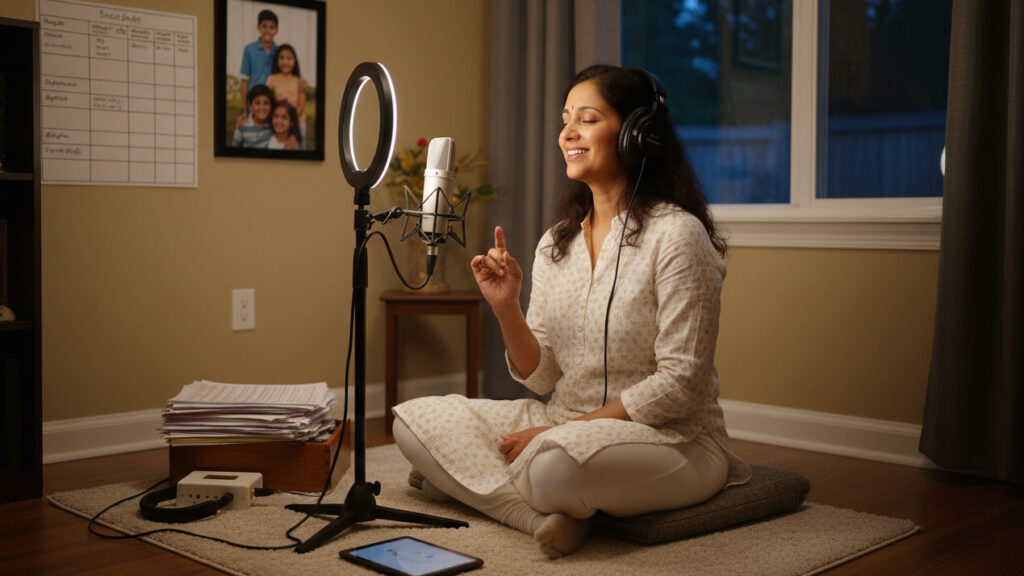
Adult Learning Timeline Realities:
Adult Learning Advantages:
- Self-motivation: Intrinsic desire to learn rather than external pressure
- Cultural understanding: Life experience enhances appreciation of spiritual and philosophical content
- Disciplined practice: Better time management and consistent practice habits
- Goal clarity: Clear understanding of personal learning objectives and timeline
Adult Learning Challenges:
- Vocal flexibility: May need more time to develop proper technique
- Time constraints: Balancing learning with work and family responsibilities
- Self-consciousness: May feel embarrassed making mistakes or singing incorrectly
- Patience requirements: Progress may feel slower compared to younger learners
Realistic Adult Timeline:
Months 1-6: Foundation with Patience
- Achievements: Basic technique, simple songs, cultural appreciation development
- Practice: 30-45 minutes daily with focus on proper vocal development
- Progress Rate: Steady but requires patience with vocal development
Months 6-18: Skill Building
- Achievements: Intermediate compositions, cultural performances, family involvement
- Practice: 45-60 minutes daily with increasing sophistication and cultural connection
- Progress Rate: Satisfying advancement with focus on personal fulfillment
Year 2-3: Personal Mastery
- Achievements: Advanced amateur capability, teaching readiness, cultural leadership
- Practice: Self-directed learning with continued teacher support for artistic growth
- Progress Rate: Continued development focused on personal goals and cultural contribution
Realistic Milestones and Progress Markers
What to Expect When: Month-by-Month Guide
How long does it take to learn Carnatic music becomes clearer when you understand specific milestones and what constitutes normal progress.
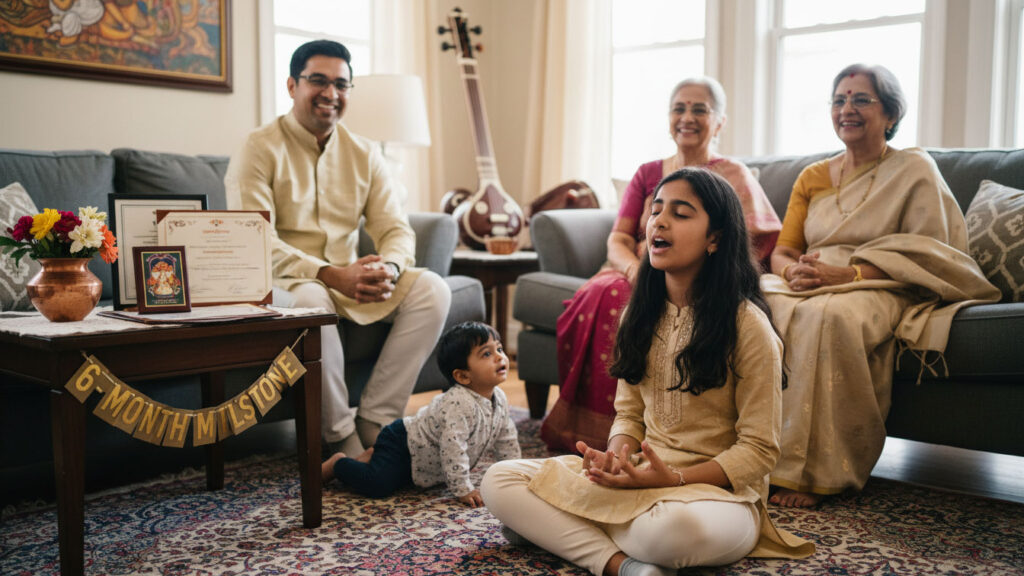
First 3 Months: Foundation Milestones
Month 1 Expectations:
✅ Technical: Can sing basic swaras with guidance, understands concept of pitch
✅ Cultural: Shows interest in music, asks questions about songs and traditions
✅ Practical: Sits through 20-30 minute lessons, attempts to practice at home
✅ Family: Parents understand practice requirements and support routine
Month 2 Expectations:
✅ Technical: Memorizes first simple song, improved pitch accuracy in swaras
✅ Cultural: Beginning to understand what ragas are, cultural curiosity growing
✅ Practical: Establishes practice routine, can practice some exercises independently
✅ Family: Family members notice improvement, child requests music time
Month 3 Expectations:
✅ Technical: Sings 2-3 simple compositions, basic rhythm awareness developing
✅ Cultural: Can explain why Carnatic music is special, shows cultural pride
✅ Practical: 25-30 minutes focused practice, beginning performance confidence
✅ Family: Ready to sing for extended family, parents confident in program choice
6-Month Major Milestone Assessment
Table Block:
| Assessment Area | Beginner Success Markers | Concerns That Need Attention |
|---|---|---|
| Technical Skills | 4-5 songs memorized, reasonable pitch accuracy | Still struggling with basic swaras, no pitch improvement |
| Cultural Knowledge | Can explain basic concepts, shows cultural interest | No curiosity about tradition, sees only as songs to memorize |
| Practice Habits | Regular practice routine established | Inconsistent practice, requires constant parental enforcement |
| Performance Confidence | Comfortable singing for family members | Still very shy or afraid to sing for others |
| Progress Enthusiasm | Excited about learning, requests music activities | Loss of interest, resistance to practice or lessons |
If Your Child Shows Success Markers: Celebrate the milestone and continue with confidence in the program choice.
If Concerns Appear: This is normal adjustment period. Consider discussing pace and approach with teacher, but don’t abandon learning yet.
One-Year Major Evaluation
By 12 months, successful students typically demonstrate:
Technical Competency:
- Repertoire: 8-10 compositions including some varnams or structured pieces
- Vocal Quality: Noticeably improved pitch accuracy and voice production
- Rhythm Skills: Can clap basic talas and understand rhythm patterns
- Raga Recognition: Beginning to identify 3-4 common ragas by ear
Cultural Integration:
- Knowledge: Understands significance of major composers and some composition meanings
- Appreciation: Shows genuine enjoyment and cultural pride in learning
- Family Integration: Music becomes part of family cultural celebrations
- Community Ready: Comfortable performing at family/community cultural events
Learning Maturity:
- Independence: Can practice some exercises and familiar songs without guidance
- Self-Assessment: Beginning to notice own mistakes and attempt self-correction
- Goal Setting: Has opinions about what they want to learn next
- Teaching Others: Can teach basic concepts to younger siblings or friends
When to Be Concerned About Progress

Normal vs. Concerning Progress Patterns
Normal Learning Variations (Don’t Worry About These):
- Temporary plateaus: 2-3 weeks of seeming stagnation followed by sudden improvement
- Varying enthusiasm: Some days excited, others less interested – completely normal
- Skill development differences: Strong in melody but weaker in rhythm, or vice versa
- Cultural connection timing: May take 6-8 months for deeper cultural appreciation to develop
- Seasonal fluctuations: Progress affected by school stress, family changes, or growth spurts
Concerning Patterns (Worth Discussing with Teacher):
- No measurable progress: After 4-6 months, still struggling with month-1 level material
- Increasing resistance: Growing negative attitude toward practice or lessons
- Physical strain: Vocal tension, headaches, or complaints of pain during singing
- Cultural disconnect: After 8-10 months, still no interest in cultural aspects
- Family stress: Music learning creating significant conflict or pressure at home
Solutions for Common Progress Concerns
If Progress Seems Slow:
- Reassess practice routine: Is there enough consistent, focused practice time?
- Check learning environment: Is practice space conducive to concentration?
- Evaluate teacher match: Does teaching style suit your child’s learning needs?
- Consider external factors: School stress, family changes, or competing activities?
- Adjust expectations: Are goals realistic for your child’s age and circumstances?
If Enthusiasm Wanes:
- Reconnect to cultural meaning: Emphasize heritage and family significance
- Add performance opportunities: Plan family showcases or community participation
- Integrate with family activities: Make music part of celebrations and daily life
- Celebrate small victories: Acknowledge progress regularly and meaningfully
- Consider peer connections: Find other children learning Indian classical music
Accelerating Your Learning Progress
Strategies to Optimize Learning Speed
While learning timelines have natural limits, smart strategies can help you progress more efficiently within realistic bounds.
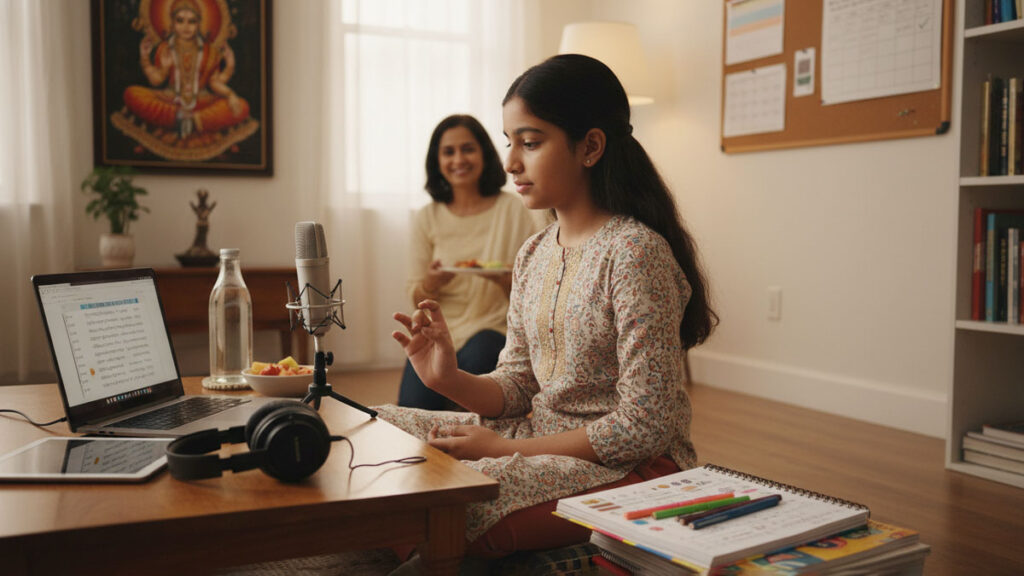
🚀 Practice Optimization Strategies
Quality Over Quantity Principles:
- Focused Sessions: 30 minutes of concentrated practice beats 60 minutes of distracted singing
- Specific Goals: Each practice session should have clear objectives and achievements
- Progressive Difficulty: Work at the edge of current capability, not too easy or impossibly hard
- Regular Review: Spend time reinforcing previously learned material, not just new songs
- Self-Assessment: Record practice sessions periodically to hear your own progress objectively
Effective Daily Practice Structure:
- Warm-up (5 minutes): Basic swaras and breathing exercises
- Review (10 minutes): Previously learned songs and exercises for reinforcement
- New Learning (10-15 minutes): Working on current lesson material and new concepts
- Creative Time (5 minutes): Improvisation within familiar ragas or personal expression
- Cool-down (5 minutes): Relaxing songs or meditative chanting
🚀 Technology and Learning Enhancement
Smart Use of Technology:
- Recording Practice: Regular recordings help track progress and identify improvement areas
- Metronome Apps: Develop steady rhythm and timing accuracy
- Tanpura Apps: Practice with proper drone accompaniment for pitch accuracy
- Music Theory Apps: Supplement lessons with additional theoretical understanding
- Cultural Content: YouTube videos of master performances for inspiration and learning
Digital Organization:
- Practice Journals: Track daily practice time, songs learned, and personal observations
- Goal Setting Apps: Set weekly and monthly learning objectives with progress tracking
- Calendar Integration: Schedule practice time like any other important family activity
- Progress Documentation: Photos, videos, and audio recordings showing advancement over time
🚀 Cultural Immersion for Faster Learning
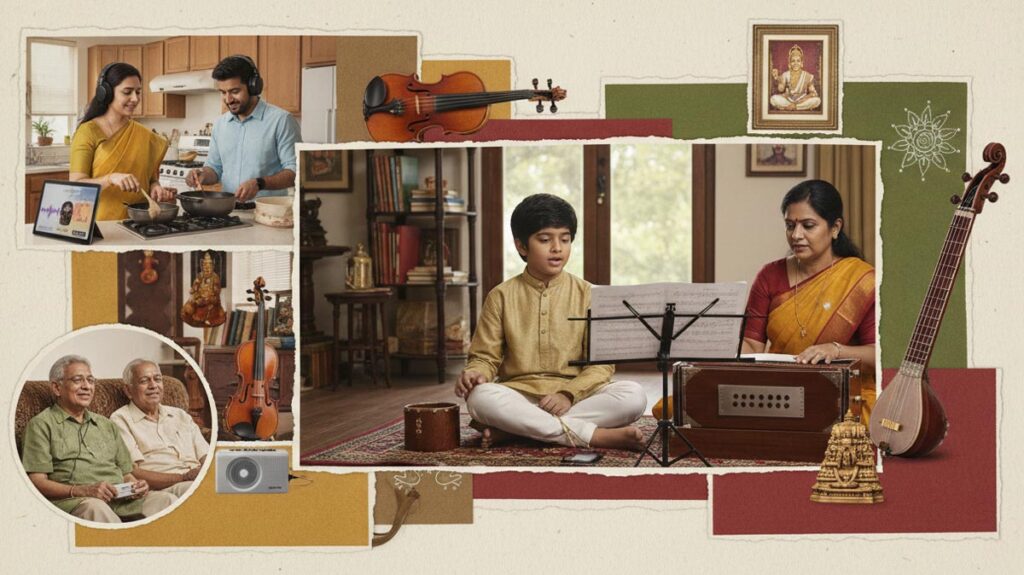
Create Musical Environment:
- Background Listening: Play Carnatic music during family time, not just practice sessions
- Cultural Events: Attend concerts, temple programs, and cultural association events regularly
- Family Participation: Encourage parents and siblings to learn basic concepts and appreciate progress
- Heritage Connection: Learn about composers’ lives, historical context, and spiritual meanings
- Community Involvement: Connect with other families learning Indian classical arts
Cultural Integration Benefits:
- Faster Concept Absorption: Familiar musical patterns accelerate new learning
- Motivation Maintenance: Cultural pride sustains effort through challenging periods
- Contextual Understanding: Songs become meaningful rather than just technical exercises
- Performance Confidence: Comfortable with cultural settings and audience expectations
- Long-term Retention: Music connected to identity and values lasts throughout life
Working with Your Swaramrit Teacher for Optimal Progress
How Swaramrit’s approach accelerates learning timelines:
🎯 Personalized Pace Optimization
Individual Assessment and Planning:
- Learning Style Recognition: Teachers quickly identify how each student learns best
- Strength Building: Emphasize natural abilities while systematically addressing challenges
- Goal Alignment: Match teaching pace and content to family objectives and timeline
- Regular Progress Review: Monthly assessments ensure optimal challenge level maintenance
- Adaptive Curriculum: Modify standard progression to suit individual student needs
Efficiency Through Expertise:
- Immediate Correction: Fix technique and cultural mistakes before they become habits
- Strategic Sequencing: Introduce concepts in optimal order for fastest comprehension
- Motivation Maintenance: Keep students engaged and enthusiastic throughout challenges
- Cultural Depth: Provide meaningful context that accelerates understanding and retention
- Family Guidance: Help parents support learning effectively at home
🎯 “Learning through Encouragement” Method
Why This Approach Speeds Learning:
- Confidence Building: Students attempt more challenging material when they feel supported
- Reduced Anxiety: Less fear of mistakes allows for faster experimentation and growth
- Positive Association: Enjoyable learning experiences increase practice time voluntarily
- Cultural Pride: Feeling successful in heritage learning motivates continued effort
- Long-term Retention: Students who enjoy learning continue advancing independently
Setting Realistic Expectations for Your Family
Managing Timeline Expectations vs. Reality
How long does it take to learn Carnatic music depends not just on the student, but on family expectations and support systems.

🎯 Healthy Expectation Framework
Realistic Timeline Expectations:
- 3-6 months: Basic cultural familiarity and simple family performances
- 6-12 months: Confidence at community cultural events and intermediate repertoire
- 12-18 months: Advanced amateur ability with basic improvisation skills
- 2-3 years: Teaching readiness and significant cultural contribution capability
- 3+ years: Continued artistic growth and potential performance mastery
Unrealistic Expectations to Avoid:
❌ “Concert-ready in 6 months”: Classical music mastery requires years of development
❌ “Perfect pitch immediately”: Even naturally gifted students need time for vocal development
❌ “No practice required”: All musical progress requires consistent, dedicated practice time
❌ “Instant cultural connection”: Heritage appreciation develops gradually through experience
❌ “Linear progress only”: Normal learning includes plateaus, challenges, and breakthrough moments
🎯 Success Metrics That Matter
Focus on These Progress Indicators:
✅ Growing Enthusiasm: Increasing interest and cultural pride in learning
✅ Family Integration: Music becoming part of family celebrations and daily life
✅ Cultural Confidence: Comfort sharing heritage with friends and broader community
✅ Technical Growth: Steady improvement in vocal ability and musical understanding
✅ Independent Learning: Developing ability to practice and explore music personally
Don’t Overemphasize These Metrics:
⚠️ Speed Compared to Others: Every child progresses at their individual optimal pace
⚠️ Perfect Performance: Focus on growth and enjoyment rather than flawless execution
⚠️ Competition Achievement: Cultural music learning is about personal and heritage development
⚠️ Professional Potential: Most students learn for cultural connection, not career preparation
Creating Supportive Family Timeline Culture
🏠 Family Practices That Support Optimal Learning Timelines
Celebration and Recognition:
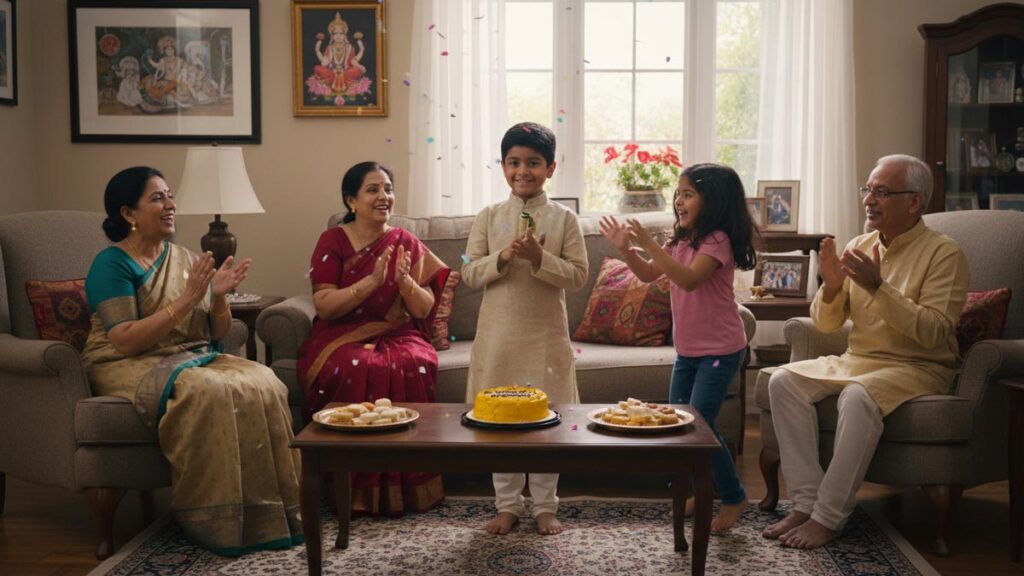
- Milestone Acknowledgment: Celebrate 3-month, 6-month, and annual progress markers
- Family Showcases: Regular opportunities for student to share learning with extended family
- Cultural Integration: Include music in holiday celebrations and family gatherings
- Progress Documentation: Photos, videos, and recordings showing advancement over time
- Heritage Storytelling: Connect musical progress to family cultural narrative and values
Patience and Persistence:
- Plateau Understanding: Recognize that temporary slow periods are normal and necessary
- Challenge Support: Increased encouragement during difficult learning phases
- Long-term Vision: Keep focus on cultural development rather than immediate results
- Comparison Avoidance: Focus on individual progress rather than comparison with other students
- Commitment Maintenance: Support continued learning through motivation fluctuations
Practical Support Systems:
- Schedule Protection: Guard practice time from competing activities and interruptions
- Environmental Optimization: Create dedicated practice space and cultural music environment
- Teacher Partnership: Work collaboratively with instructors to support learning goals
- Extended Family Involvement: Help grandparents and relatives appreciate and encourage progress
- Community Connection: Participate in cultural events and connect with other learning families
Conclusion: Your Personal Learning Timeline Starts Now
How long does it take to learn Carnatic music? After exploring timelines, factors, and strategies, the most important insight is that your musical journey begins the moment you commit to authentic cultural learning.
Key Timeline Insights for Your Family:
🎯 Realistic Expectations Lead to Success: Understanding natural learning phases prevents frustration and maintains motivation
🎯 Individual Factors Matter Most: Your child’s age, natural ability, and family support determine progress speed more than generic timelines
🎯 Quality Instruction Accelerates Progress: Expert guidance can reduce learning time by 40-50% compared to self-teaching attempts
🎯 Cultural Integration Enhances Learning: Music connected to heritage and family values progresses faster and lasts longer
🎯 Patience and Persistence Pay Off: Students who continue through natural plateaus achieve lasting mastery and cultural connection
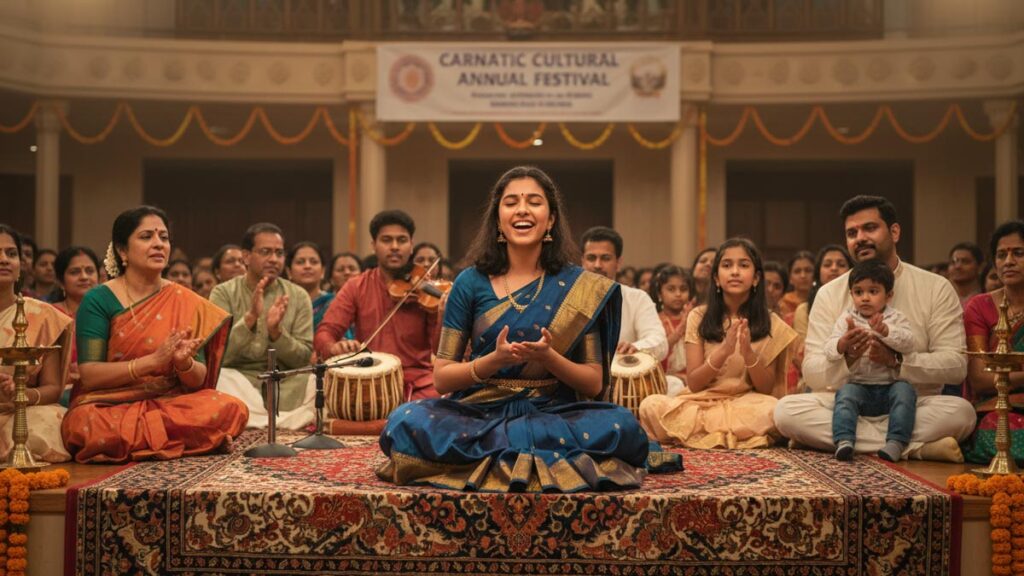
The most successful musical journeys begin with families who:
- Choose quality instruction from the beginning rather than experimenting with cheaper alternatives
- Set realistic timelines based on their child’s individual characteristics and family circumstances
- Integrate music learning into family cultural life rather than treating it as isolated skill development
- Celebrate progress regularly while maintaining patience for natural learning phases
- View musical education as cultural investment rather than short-term achievement goal
Whether your child needs 12 months to reach community performance level or 24 months to develop advanced skills, the timeline matters less than the authentic cultural connection and personal growth achieved along the way.
For Indian-American families ready to begin this rewarding journey, Swaramrit’s online Carnatic music lessons provide the expert guidance, cultural authenticity, and personalized attention that optimize learning timelines while ensuring deep heritage connection.
Your family’s musical timeline doesn’t have to be perfect – it just has to begin. Contact Swaramrit today for a consultation about realistic timelines, learning approaches, and how our “Learning through Encouragement” methodology can help your child achieve meaningful progress within your family’s goals and schedule.
Continue Your Musical Education Research:
- Complete Guide to Online Carnatic Music Lessons – Comprehensive overview of quality learning options
- Cost of Online Carnatic Music Lessons – Investment planning for your musical journey
- Learning Carnatic Music as an Adult – Timeline considerations for parent learners
- Can You Learn Carnatic Music by Yourself – Why guided instruction optimizes timelines